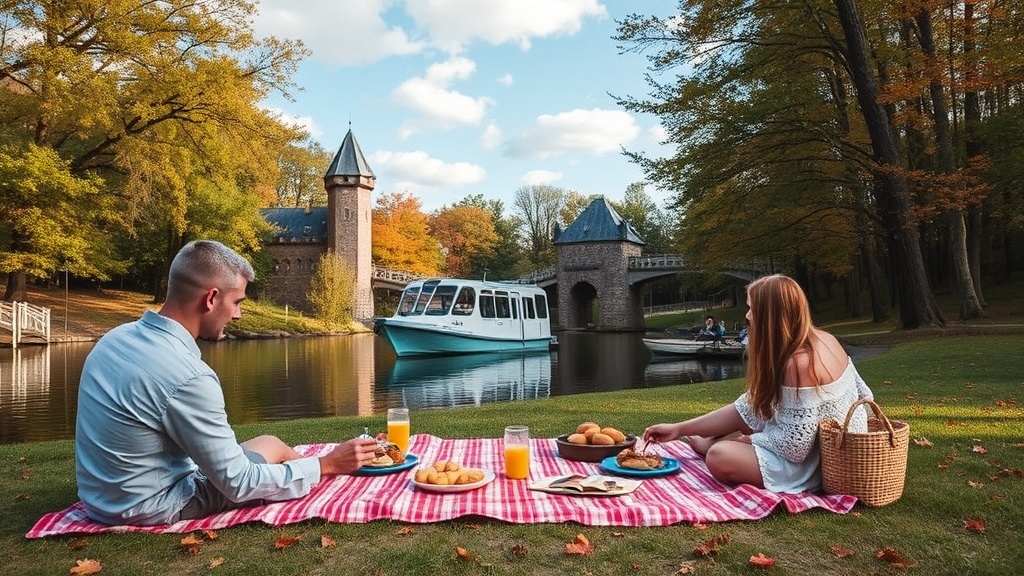
Planning a Perfect Picnic at Parc de la Chute de la Grande Chaudière

Most people think you need to drive hours into the Montérégie backcountry to find a truly spectacular waterfall, but that's a mistake. You can find a world-class natural experience right here at the Parc de la Chute de la Grande Chaudière without leaving the Chateauguay area. This guide details exactly how to plan a successful outing, from the best spots for your picnic blanket to the specific gear you'll need to stay comfortable near the water.
What is the best time of year to visit the waterfall?
The best time to visit is between late May and early October when the weather is stable and the foliage is vibrant. While the waterfall flows year-round, the accessibility of the trails and the comfort of sitting outdoors depend heavily on the season. If you go in the spring, you'll deal with mud and higher water volumes; if you go in late autumn, the temperature drops sharply near the mist.
Summer is the obvious choice for a picnic, but it comes with its own set of rules. The humidity in Quebec during July and August can be intense, especially near dense vegetation. You'll want to arrive early—ideally before 11:00 AM—to snag a prime spot near the viewing areas before the midday heat and the crowds arrive.
If you're a photographer, autumn offers the most striking colors. The way the orange and red leaves contrast with the white water is incredible. Just remember that the ground gets slippery as the leaves fall. It's a good idea to check the Sépaq website or local park alerts if you're planning a trip during the shoulder seasons to ensure trails aren't closed due to ice or heavy rain.
Seasonal Comparison for Picnic Planning
| Season | Pros | Cons | Best For |
|---|---|---|---|
| Spring | High water volume | Muddy trails, bugs | Photography |
| Summer | Warm weather | High crowds, humidity | Families/Picnics |
| Autumn | Stunning colors | Cold air, slippery leaves | Nature walks |
| Winter | Frozen scenery | Extreme cold, ice-restricted | Winter hiking |
What should I pack for a picnic at the park?
Pack a combination of durable outdoor gear, weather-resistant food containers, and plenty of hydration. Since you'll be walking on trails to reach the best views, you can't just carry a heavy, standard cooler. You need to be smart about weight and stability.
First, the footwear. Don't even think about wearing flip-flops or light sneakers. The terrain around the falls can be uneven and damp. I've seen too many people slip on the rocks near the edge. A pair of sturdy hiking boots or even high-quality trail runners like the Salomon X Ultra series will keep your ankles stable. Even if you're just walking a short distance, the grip matters.
Next, let's talk about the food. You want things that won't wilt or melt. A sandwich with heavy mayo is a bad idea when it's 25°C outside. Instead, go for hard cheeses, cured meats, or hearty grain salads. If you're picking up supplies locally, you can find incredible ingredients by finding the best local produce at the Chateauguay markets. Fresh sourdough, local berries, and a sharp cheddar make for a much better experience than a soggy bag of chips.
- Insulated Water Bottle: A Hydro Flask or similar vacuum-insulated bottle is a must. The water stays cold even if you leave it in a backpack in the sun.
- Quick-Dry Towel: Even if you don't swim, the mist from the falls can dampen your clothes or your seating area.
- Biodegradable Wipes: Things get sticky. You'll want a way to clean your hands before eating.
- Lightweight Folding Chair: If you aren't using a blanket, a compact chair makes a huge difference for your back.
One thing to keep in mind—and this is a big one—don't forget a trash bag. There are very few bins near the actual lookout points. If you leave your trash behind, you're not just being a bad guest; you're hurting the local ecosystem. Pack it in, pack it out.
Where are the best picnic spots near the falls?
The best spots are the designated flat areas slightly away from the direct spray of the falls to avoid getting soaked. While the view from the very edge is breathtaking, the wind can carry a fine mist that will dampen your food and your clothes in minutes.
There are a few specific areas where the terrain levels out. I usually recommend the flat clearing about 50 meters back from the main viewing platform. It gives you the sound and the sight of the falls without the constant dampness. It's also far enough away that you aren't in the middle of the "traffic" if a larger group arrives.
If you want more privacy, look for the secondary trails that lead deeper into the woods. These spots are a bit more of a hike, but the payoff is a quiet meal surrounded by trees. Just be aware that the shade can make these areas feel much cooler than the open areas near the water. If you're visiting in the early spring, it might still feel quite chilly in the shade.
"The sound of the water is constant, but the way it changes based on your distance is what makes the experience. Near the edge, it's a roar; a hundred feet away, it's a soothing background hum."
If you're bringing a cooler, don't try to carry a massive, hard-sided Coleman cooler through the wooded paths. It's a recipe for a sore back and a frustrated afternoon. A high-quality soft-sided cooler bag, like something from YETI, is much easier to manage on uneven ground and can be easily tucked into a backpack.
One more tip: if you're bringing kids, bring a small, lightweight waterproof mat. Even if the ground looks dry, the moisture levels in the soil near a waterfall are much higher than in a standard backyard. A standard picnic blanket will soak up moisture from the ground and leave you sitting in a damp mess by the time you're halfway through your meal.
Check the weather forecast one last time before you head out. Not just for rain, but for wind. A heavy wind can turn a pleasant afternoon into a very wet one if you're sitting near the falls. If the wind is gusty, move further back into the treeline for a more controlled environment.
Steps
- 1
Choose your perfect spot
- 2
Pack lightweight snacks
- 3
Bring eco-friendly supplies
- 4
Leave no trace